The world of STEM (Science, Technology, Engineering, and Mathematics) is an exhilarating one, brimming with discovery, innovation, and the power to shape our future. But let’s be honest: navigating complex STEM coursework can often feel like scaling Mount Everest in a blizzard. From intricate calculus problems to advanced organic chemistry reactions, the demands are rigorous, and the learning curve can be steep. This semester, however, you’re not just going to survive; you’re going to thrive.
This comprehensive guide, informed by educational research and practical strategies, is designed to equip you with the tools and mindset needed to conquer even the most challenging STEM subjects. We’ll delve into effective study techniques, resource utilization, and maintaining a healthy academic balance, ensuring you not only understand the material but truly master it.
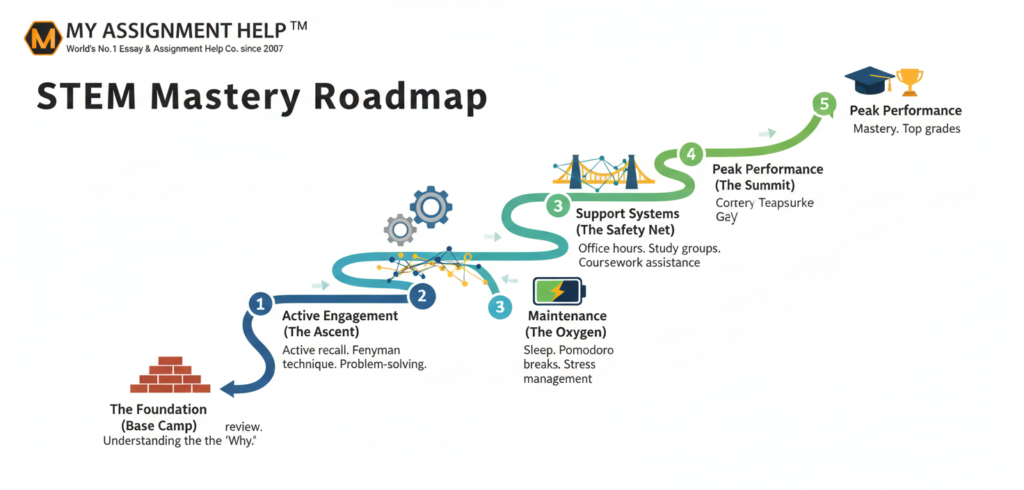
The Foundation: Understanding the “Why” and Building Your Base
Before you even open a textbook, it’s crucial to understand the “why” behind your STEM courses. What real-world problems do they solve? How do they contribute to scientific advancement? A study published in Educational Psychologist (Pintrich, 2003) highlights that students who understand the relevance and value of their learning are more motivated and engaged, leading to deeper comprehension.
Once motivated, solidify your foundational knowledge. Many complex STEM topics build upon earlier concepts. For instance, advanced physics often relies heavily on a strong grasp of algebra and trigonometry. If you find yourself struggling with current material, it’s often a sign that there’s a gap in your understanding of prerequisite topics. Don’t shy away from revisiting earlier chapters or even previous courses. Online resources like Khan Academy, Coursera, and edX offer excellent refreshers.
Sometimes, the sheer volume or difficulty of the material can feel overwhelming. If you’re finding it hard to keep up with the pace or understand specific concepts, remember that you don’t have to go it alone. Many students benefit from seeking external support. Services like do my coursework can provide invaluable assistance by offering expert guidance and helping you bridge knowledge gaps, ensuring you stay on track and build a solid understanding. This proactive approach can make a significant difference in your academic performance.
Strategic Study Techniques for STEM Success
Effective studying for STEM isn’t just about spending hours with your nose in a book; it’s about smart, focused effort.
- Active Recall and Spaced Repetition: Instead of passively rereading notes, actively test yourself. Flashcards, self-quizzing, and attempting practice problems without looking at solutions are powerful active recall methods. Couple this with spaced repetition – reviewing material at increasing intervals – to cement information in your long-term memory. Research by Dunlosky et al. (2013) in Psychological Science in the Public Interest identifies active recall as one of the most effective study techniques.
- Problem-Solving Focus: STEM subjects are inherently problem-based. Don’t just memorize formulas; understand when and how to apply them. Work through as many practice problems as possible. If you get stuck, try to identify the exact step where you faltered. Understanding your mistakes is as crucial as getting the right answer.
- Conceptual Understanding Over Rote Memorization: While some memorization is inevitable, prioritize understanding the underlying principles. For example, in chemistry, instead of just memorizing reaction products, understand the mechanisms and electron movements that lead to those products. This deeper understanding will allow you to tackle unfamiliar problems.
- Visualize Complex Concepts: Many STEM topics benefit from visualization. Draw diagrams, create flowcharts, or use online simulations to see how concepts interact. For instance, visualizing vector fields in physics or molecular structures in biology can significantly aid comprehension.
Leveraging Resources and Collaboration
You’re surrounded by resources designed to help you succeed. Use them!
- Professor’s Office Hours: Your professors are your primary resource. They’re experts in their field and genuinely want to help. Come prepared with specific questions, not just “I don’t get it.”
- Study Groups: Collaborating with peers can be incredibly effective. Explaining concepts to others reinforces your own understanding, and different perspectives can illuminate challenging topics. Ensure your study group stays focused and productive.
- Tutoring Centers: Most universities offer free tutoring services. Tutors can provide personalized guidance and alternative explanations that might click for you.
- Online Platforms and Textbooks: Don’t limit yourself to the assigned textbook. Explore supplementary materials, video lectures, and interactive tutorials online. Websites like Brilliant.org offer interactive lessons for various STEM fields.
- Professional Assistance When Needed: There are times when even with diligent effort, a particular assignment or project can prove exceptionally challenging due to its complexity or time constraints. In such situations, seeking expert help can be a strategic move to maintain your grades and alleviate stress. If you’re wondering, “Can I really pay for assignments?” the answer is yes, reputable services exist to provide high-quality, original assistance, ensuring you submit well-researched and accurately completed work when you need it most.
Maintaining Academic Well-being: The Unsung Hero of Success
Intense academic pressure can take a toll. Neglecting your well-being will ultimately hinder your performance.
- Prioritize Sleep: Adequate sleep is not a luxury; it’s a necessity for cognitive function, memory consolidation, and problem-solving abilities. Aim for 7-9 hours per night.
- Manage Stress: STEM coursework can be stressful. Find healthy coping mechanisms like exercise, mindfulness, hobbies, or spending time in nature. The American Psychological Association consistently publishes research on the detrimental effects of chronic stress on academic performance (e.g., APA, 2020).
- Breaks are Essential: Long study sessions without breaks lead to diminished returns. Implement the Pomodoro Technique (25 minutes of focused work, 5-minute break) or similar strategies to maintain focus and prevent burnout.
Key Takeaways
- Understand the “Why”: Connect coursework to real-world applications for increased motivation.
- Build a Strong Foundation: Revisit prerequisite material if current concepts are challenging.
- Active Learning is Key: Use active recall, practice problems, and conceptual understanding over rote memorization.
- Leverage All Resources: Utilize professors, study groups, tutors, and online platforms.
- Prioritize Well-being: Ensure adequate sleep, stress management, and regular breaks to sustain academic performance.
Frequently Asked Questions (FAQ)
Q1: How can I improve my math skills for STEM courses?
A1: Consistent practice is paramount. Start with foundational concepts, work through numerous practice problems, and don’t hesitate to use online resources like Khan Academy for targeted skill-building. Understanding the underlying logic rather than just memorizing formulas is crucial.
Q2: What’s the best way to prepare for a challenging STEM exam?
A2: Begin preparing well in advance, focusing on active recall and practice problems. Review all lecture notes, textbook chapters, and homework assignments. Form a study group to discuss difficult concepts and test each other. Consider creating a “cheat sheet” (even if not allowed in the exam) during your study process to consolidate key formulas and concepts.
Q3: How do I avoid burnout during a demanding semester?
A3: Schedule regular breaks, prioritize sleep, and engage in activities you enjoy outside of academics. Break down large tasks into smaller, manageable chunks. Don’t be afraid to ask for help from professors, peers, or academic support services when you feel overwhelmed.
Q4: Is it beneficial to re-read textbooks?
A4: Re-reading alone is generally not the most effective strategy. Instead, combine it with active learning techniques like note-taking, summarizing in your own words, asking yourself questions as you read, and working through example problems provided in the text.
Q5: When should I seek professional academic help?
A5: If you’re consistently struggling with understanding concepts, falling behind on assignments, or feeling overwhelmed despite your best efforts, it’s a good time to seek professional help. This could be through university tutoring services, academic advisors, or specialized online platforms that offer expert assistance.
References
- American Psychological Association. (2020). Stress in America™ 2020: A National Pandemic. Retrieved from https://www.apa.org/news/press/releases/stress/2020/report-october
- Dunlosky, J., Rawson, K. A., Marsh, E. J., Nathan, M. J., & Willingham, D. T. (2013). Improving students’ learning with effective learning techniques: Promising directions from cognitive and educational psychology. Psychological Science in the Public Interest, 14(1), 4-58.
- Pintrich, P. R. (2003). A motivational science perspective on the role of student motivation in learning and teaching contexts. Journal of Educational Psychology, 95(4), 667–686.
Author Bio
Dr. Anya Sharma is a Senior Academic Consultant at MyAssignmentHelp.com, specializing in STEM education and student success strategies. With a Ph.D. in Chemical Engineering from a leading US university and over a decade of experience in both academia and professional tutoring, Dr. Sharma brings a wealth of knowledge and practical insights to students navigating complex coursework. Her passion lies in demystifying challenging concepts and empowering students to achieve their full academic potential. She regularly contributes to educational blogs, focusing on effective study techniques, critical thinking, and academic well-being.